

by Mike Matzinger
Walt Disney (1901 – 1966) grew up in a family that encouraged creativity, imagination, and a love of storytelling. His early life on a farm in Marceline, Missouri, exposed him to nature, animals, and outdoor adventures, experiences that would later influence the whimsical worlds he created. As a young boy, Disney joined the Boy Scouts of America, and the skills and discipline he learned in Scouting carried through into his professional life and helped him navigate the challenges of building an entertainment empire.
In his teenage years, Disney moved to Kansas City, where he developed a passion for drawing and animation. He co-founded the Laugh-O-Gram Studio, producing short animated films, before moving to Hollywood to start the Disney Brothers Studio with his brother Roy. In 1928, he introduced Mickey Mouse in the cartoon Steamboat Willie, which became an international sensation and established him as a pioneer in animation. His work on feature-length animated films, including Snow White and the Seven Dwarfs, transformed the film industry and set new standards for storytelling and technical innovation.
Beyond his films, Disney envisioned spaces where imagination and learning merged. Disneyland, which opened in 1955, and later Walt Disney World, offered immersive environments where children and families could explore, learn, and create memories together.
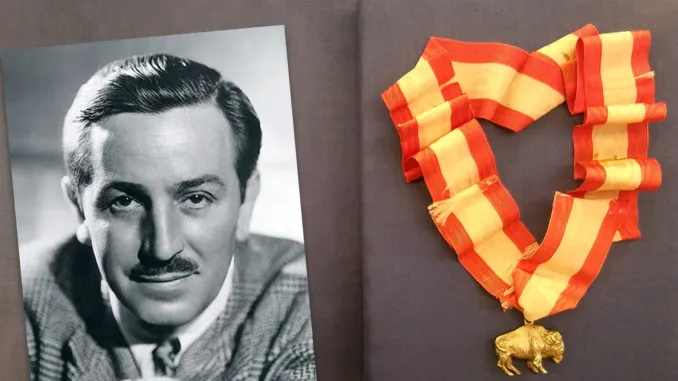
In recognition of his contributions to young people, Disney received the Silver Buffalo Award in 1946, the Scouting America’s highest adult honor.