

by Mike Matzinger
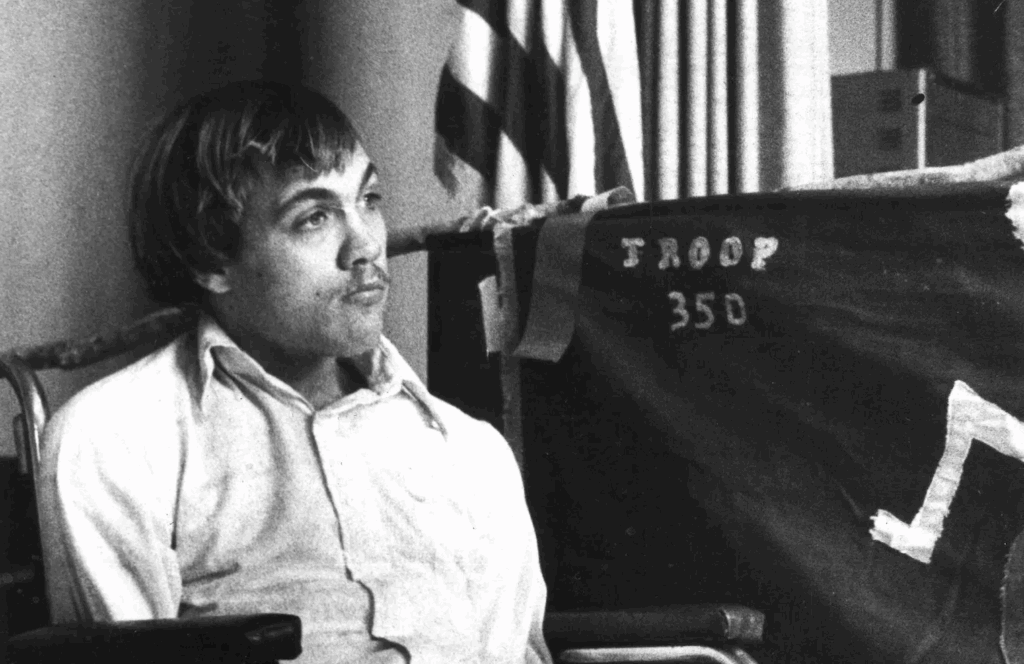
Gregory John Wittine, born March 25, 1955, in Queens, New York, dedicated his life to perseverance and service, leaving a legacy that reshaped the Boy Scouts of America. Raised in Baldwin, Long Island, by his parents Ferdinand and Marion Wittine, Greg lived with a severe case of cerebral palsy that left him unable to walk or speak. He communicated by pointing to letters on a homemade word board, spelling out his thoughts with patience and determination. Despite physical challenges, he immersed himself in Scouting throughout his youth, earning merit badges in fields ranging from fire safety to wildlife. To fulfill the requirements for a hiking badge, he crawled through the woods for a mile until his knees were raw, then wheeled himself another nine miles to finish. His goal was clear: he wanted to become an Eagle Scout.
By 1978, Wittine had earned all 24 merit badges required at the time, but his dream was thwarted when national rules prevented Scouts over 18 from earning the rank. At 23, he was denied the Eagle Scout award. Refusing to give up, Wittine began a campaign to change Scouting’s policies. His quiet determination caught the attention of newspapers, television stations, and former Scouts across the country, who mailed him their own Eagle medals in solidarity. Public pressure mounted, and in May 1978, the Boy Scouts of America announced a landmark change: severely disabled Scouts would no longer face age restrictions in their pursuit of Eagle rank, though they would still be required to meet the same badge requirements. Wittine received his Eagle Scout badge that spring, along with congratulatory letters from figures including President Jimmy Carter, former President Gerald Ford, and Senator Bob Dole. He and his troop of Scouts with cerebral palsy were even invited to the White House by First Lady Rosalynn Carter, where his achievement was celebrated as a victory not only for him but for all Scouts with disabilities. Mike Matzinger, a national leader of the Boy Scouts with knowledge of Scouts who have disabilities, later estimated that “tens of thousands” of Scouts have benefited from policy changes inspired by Wittine’s persistence.
After earning Eagle, Wittine spent much of his adult life volunteering at Long Island Jewish Medical Center, where he became known as a warm and dependable colleague. He continued to embody the resilience and compassion that had carried him through Scouting. When asked what gave him the strength to challenge the national organization, Wittine spelled out a simple but powerful answer: “My mother wanted to see me become an Eagle.”
Greg Wittine died on March 5, 2023, in Bayville, New York, at the age of 67 from heart and lung failure. He was buried in his Boy Scout uniform, his merit badge sash draped across him, though not with his Eagle medal—it had been gifted to his nephew, just as many former Scouts had once shared theirs with him. Though his name had faded from Scouting’s institutional memory in later years, his impact endured. Because of his persistence, tens of thousands of Scouts with disabilities have since been able to achieve Eagle rank. His life stands as a testament to determination, inclusion, and the power of never giving up.
https://www.nytimes.com/2023/03/24/us/greg-wittine-dead.html